8 October 2026
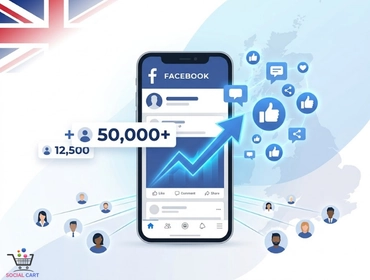
If you’ve ever wondered whether that little thumbs-up still matters, here’s the short answer: yes — more than most people realise. Facebook post likes algorithm ranking is one of the most searched topics among marketers today, and for good reason. Meta’s ranking system has evolved into a sophisticated, AI-driven machine, yet likes remain one of the earliest and most influential signals it reads. Understanding how Facebook likes affect algorithm performance can be the difference between a post that reaches 200 people and one that reaches 20,000.
In this guide, we’ll unpack exactly how the Facebook algorithm ranking system works, what role likes play alongside comments and shares, and how you can use this knowledge to grow your reach — organically and strategically. Whether you run a small business page, a personal brand, or a UK-based agency, this breakdown gives you a clear, practical roadmap.
Let’s dive in.
🧠 How the Facebook News Feed Algorithm Works
Before we talk about likes specifically, it helps to understand the engine behind the scenes. The modern Facebook News Feed is no longer powered by the old Facebook EdgeRank formula alone. Instead, Meta (Facebook’s parent company) now uses a layered machine learning ranking system that evaluates thousands of signals for every single post, in real time, personalised to every single user.
Here’s how the process works in simple terms. Every time you open Facebook, the algorithm scans the available inventory — posts from friends, pages, groups, and AI-driven content recommendations. It then predicts how likely you are to engage with each piece of content. These predictions are built on your past user engagement behavior: what you’ve liked, watched, commented on, shared, and even how long you’ve paused while scrolling (known as dwell time on posts).
Each post receives a content relevance score, and the posts with the highest scores appear at the top of your feed. This is what we call personalized feed ranking — no two users see the same feed, because no two users behave the same way.
So where do likes fit into this? Likes are one of the fastest, clearest, and most frequent engagement signals the algorithm collects. When a post starts gathering likes quickly, Facebook’s content distribution algorithm interprets it as a quality signal and begins showing that post to a wider audience. If you want a deeper look at the full system, our guide on what UK businesses need to know about the Facebook algorithm breaks it down in detail.
👍 Why Facebook Likes Still Matter for Reach
There’s a popular myth floating around marketing circles that likes are a “vanity metric” — nice to look at, but meaningless for growth. The reality is more nuanced. While likes alone won’t make a post go viral, the Facebook likes impact on reach is real, measurable, and backed by how the ranking system actually functions.
Think of likes as the algorithm’s first impression. When you publish a post, Facebook shows it to a small test audience — usually a slice of your followers. The algorithm then watches how that group reacts. If the post interaction rate is strong within the first 30–60 minutes, Facebook expands distribution to a larger circle. If engagement stays flat, reach quietly stalls. This early testing phase is exactly why pages with consistent engagement rarely experience a sudden Facebook reach drop, while inactive pages battle constant organic reach decline.
Likes also create something psychologists call social proof on Facebook. When users scroll past a post with 500 likes versus one with 5, the higher count signals credibility — and people are measurably more likely to stop, read, and engage. That extra engagement feeds back into the algorithm, creating a snowball effect. This is the hidden engine behind most viral content Facebook sees every day: early likes trigger wider distribution, wider distribution triggers more likes, and the loop compounds.
So, do likes increase Facebook reach? Yes — directly as a ranking signal, and indirectly as a trust signal that encourages further interaction.
⚖️ Facebook Likes vs Comments vs Shares: What Weighs More?
Not all engagement is created equal. Meta’s system applies signal weighting, meaning different actions carry different values when calculating a post’s score. Understanding the Facebook likes vs comments vs shares hierarchy helps you design content that earns the right mix of signals.
Here’s a simple comparison of how the major audience interaction signals stack up:
| Engagement Signal | Algorithm Weight | Why It Matters |
|---|---|---|
| 👍 Likes & Reactions | Moderate | Fast, high-volume quality signal; fuels early distribution |
| 💬 Comments | High | Shows active conversation; comment depth boosts ranking |
| 🔄 Shares | Very High | Strongest endorsement; extends reach to new audiences |
| ⏱️ Dwell Time / Watch Time | High | Proves genuine interest, especially for video posts |
| 🚫 Hide / Unfollow | Strong Negative | Negative feedback signals suppress future reach |
A few important nuances sit behind this table. First, reaction types (Like, Love, Haha, Wow) aren’t weighted identically — emotional reactions like “Love” typically signal stronger engagement than a standard thumbs-up, because they require a deliberate extra tap. Second, Meta’s meaningful social interactions (MSI) framework prioritises content that sparks genuine conversation between people, which is why share rate and comment depth often outrank raw like counts for mature pages.
That said, likes remain the most accessible signal. A user might comment on one post out of fifty, but they’ll like ten. That volume makes likes the foundation of your Facebook engagement metrics ranking — the baseline the algorithm uses before weighing heavier signals. We explored a similar dynamic on Instagram in our comparison of Instagram likes vs comments and the algorithm, and the principle holds across Meta’s platforms.
📊 Facebook Post Visibility Factors Beyond Likes
Likes are powerful, but they work within a larger ecosystem of News Feed ranking factors. If you want sustainable growth, it’s worth understanding the full picture of Facebook post visibility factors that shape where your content lands.
Timing and recency play a significant role. Fresh posts receive priority, and posting when your audience is actually online dramatically improves your early engagement window — that critical first hour where likes matter most.
Content format matters more than ever. Meta currently rewards video heavily, with watch time (video posts) acting as a major ranking input. Reels and short-form video ranking gets its own recommendation pipeline, often reaching users who don’t even follow your page. If your strategy is still photo-and-text only, you’re leaving reach on the table.
Click-through rate (CTR) and link behaviour also feed the system. Posts that earn genuine clicks without baiting perform well; posts that trick users into clicking get flagged. This connects to one of the algorithm’s harshest penalties: the engagement bait penalty. Phrases like “LIKE if you agree!” or “SHARE this now!” are actively demoted by Meta’s Facebook recommendation system. The algorithm’s AI is trained to detect manufactured engagement, so earn your likes with quality — never beg for them.
Finally, your page’s historical performance matters. Pages with a track record of strong social media engagement signals earn a trust advantage, meaning each new post starts its life with better distribution odds. Consistency compounds.
📉 The Relationship Between Likes and Organic Reach
Let’s address the elephant in the room: Facebook organic reach has been declining for years, and the average page now reaches only a small fraction of its followers organically. This makes every engagement signal — especially likes — more valuable, not less.
Here’s the practical logic. When organic distribution is limited, the algorithm becomes more selective about which posts deserve amplification. Facebook post reach and likes are tightly correlated in this environment because likes are the primary currency the algorithm uses to separate “worth showing” from “safe to skip.” A post with strong early likes effectively buys itself additional organic distribution that money can’t directly replicate.
Consider a practical example. A UK bakery posts a behind-the-scenes video at 8 AM. Within the first hour, it collects 80 likes from its most loyal followers. The Facebook engagement algorithm reads this as a strong signal, pushes the post into more feeds, and by evening the video has reached four times the bakery’s follower count. The same video, posted at 2 AM with only 6 early likes, might never leave the test phase. Same content, same page — radically different outcomes, driven almost entirely by early like velocity.
This is why smart brands build a complete Facebook page growth strategy around engagement momentum. Our complete UK guide to Facebook growth services walks through how to build this momentum step by step.
🛠️ How to Get More Likes and Boost Your Algorithm Ranking
Theory is useful, but results come from execution. Here’s how to practically increase your likes and, by extension, your algorithm ranking.
Lead with native video and Reels. Meta’s recommendation engine actively pushes short-form video to non-followers, giving you free exposure to new audiences. More eyeballs mean more opportunities for likes, and strong watch time multiplies the effect.
Post when your audience is awake and active. Early engagement velocity is everything. Check your page insights, find your audience’s peak hours, and schedule accordingly. A great post published at the wrong time is a wasted post.
Spark emotion, not just information. Content that makes people feel something — pride, humour, nostalgia, surprise — earns reactions at a far higher rate than purely informational posts. Remember, emotional reactions carry extra weight in the ranking system.
Reply to every comment quickly. When you respond, commenters often return, and conversation threads deepen. The algorithm reads this comment depth as a strong MSI signal and rewards the post with extended reach — which brings in more likes.
A few quick wins worth keeping on your checklist:
- Use high-quality visuals sized correctly for the feed
- Ask genuine questions (without crossing into engagement bait)
- Keep captions scannable — hook in the first line
- Cross-promote posts in relevant groups and Stories
For pages that need an initial credibility push, many UK brands pair organic efforts with buying Facebook post likes to strengthen early social proof, or combine Facebook page likes and engagement packages with a consistent content calendar. If you’re weighing up that route, our honest breakdown of whether buying Facebook engagement is safe for UK businesses covers the dos and don’ts in detail.
🚫 Common Mistakes That Hurt Your Facebook Ranking
Just as the right actions lift your reach, the wrong ones quietly sink it. The most damaging mistake is engagement baiting — explicitly asking for likes, shares, or comments in a manipulative way. Meta’s AI detects these patterns and applies the engagement bait penalty, suppressing not just the offending post but sometimes your page’s overall distribution.
The second mistake is ignoring negative feedback signals (hide post, unfollow). Every time a user hides your post or unfollows your page, the algorithm learns your content annoyed someone. Pages that post too frequently, recycle stale content, or push constant sales messages accumulate these signals and watch their reach erode month after month.
Third, inconsistency kills momentum. The algorithm favours pages with steady posting rhythms and reliable engagement histories. Posting five times one week and disappearing for three weeks resets your momentum and forces every new post to start from zero trust.
Finally, don’t ignore the broader Meta ecosystem. Facebook’s ranking system shares DNA with Instagram’s — strategies that work on one often translate to the other. Our guide on how the Instagram algorithm works is a useful companion read if you manage both platforms, and understanding the difference between Facebook followers and page likes will help you measure the right metrics as you grow.
💡 Final Thoughts: Likes Are Your Algorithm’s First Language
Here’s the key takeaway. The Facebook post likes algorithm ranking relationship is simple at its core: likes are the algorithm’s first and fastest read on your content’s quality. They don’t carry the heaviest weight — shares and deep comments do — but they arrive earliest, in the greatest volume, and they trigger the distribution decisions that determine whether anyone ever sees your post at all.
Treat likes as the foundation, not the finish line. Build content worth reacting to, publish it when your audience is listening, respond to the conversation it creates, and let Meta’s AI-driven ranking system do what it’s designed to do: reward content people genuinely enjoy.
Ready to accelerate your Facebook growth? 🚀 Social Cart helps UK brands and creators build real engagement momentum with safe, reliable Facebook growth services — from post likes to followers and beyond. Explore our packages today and give your next post the head start it deserves.
❓ Frequently Asked Questions
Do likes increase Facebook reach? Yes. Likes act as an early quality signal to Facebook’s algorithm. When a post earns strong likes shortly after publishing, the algorithm expands its distribution to a wider audience, directly increasing organic reach.
Are Facebook likes more important than comments or shares? No — shares and meaningful comments carry heavier weight in Facebook’s signal weighting system. However, likes arrive in far greater volume and act as the foundational signal that triggers early distribution decisions.
Why has my Facebook reach dropped suddenly? Common causes include reduced posting consistency, accumulated negative feedback signals (hides and unfollows), engagement bait penalties, or a shift in content format away from what the algorithm currently rewards, such as short-form video.
Do emotional reactions like “Love” count more than a standard like? Yes. Deliberate emotional reactions typically signal stronger engagement than a standard thumbs-up and can carry slightly more weight in the post’s content relevance score.
Is it safe to buy Facebook post likes? It can be, provided you use a reputable provider that delivers gradual, authentic-looking engagement. Avoid bot-driven services, and always pair purchased social proof with genuine, quality content.

 our blog
 Alex White
 8 October 2026